Electric vertical takeoff and landing (eVTOL) aircraft are introducing a new approach to aviation. Designed around electric propulsion, vertical flight, advanced avionics, and increasingly sophisticated digital systems, these aircraft create new opportunities for how pilots interact with information, how aircraft communicate visually, and how optical systems are integrated throughout the platform.
As the advanced air mobility (AAM) market develops, optics can play an important role in solving these challenges. From cockpit displays and head-up displays to exterior lighting, sensors, and precision light management, eVTOL optical technologies can help engineers improve visibility, control light more efficiently, and integrate advanced functionality within increasingly compact aircraft architectures.
Luminit’s experience in light shaping, holographic optics, microoptics, and scalable optical manufacturing provides a technology foundation that can support this next generation of aircraft.
How eVTOL Aircraft Are Creating New Optical Requirements
eVTOL aircraft combine elements of traditional aviation with technologies more commonly associated with electric vehicles and next-generation mobility.
That convergence creates a unique engineering environment. Aircraft designers must consider weight, available space, energy consumption, visibility, reliability, and pilot situational awareness while integrating increasingly sophisticated electronic systems.
Optical components therefore need to accomplish more without unnecessarily increasing system complexity.
For eVTOL manufacturers, this can mean exploring optical technologies capable of supporting:
- Compact and lightweight display architectures
- Efficient exterior and interior illumination
- Controlled light distribution
- Enhanced cockpit visibility
- Advanced sensing and imaging systems
- Head-up and transparent display concepts
Rather than viewing each optical component independently, future aircraft can benefit from considering light management as part of the overall vehicle architecture.
Advanced Optics for the Next Generation of eVTOL Cockpits
The cockpit is one of the clearest examples of this evolution.
As aircraft become increasingly digital, pilots need access to critical information without unnecessary visual clutter. Displays must remain visible across changing ambient-light conditions while providing consistent brightness, contrast, and viewing performance.
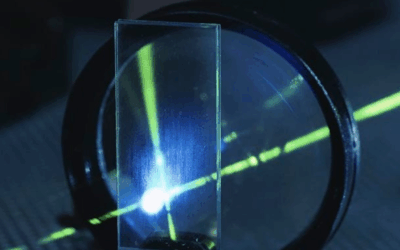
Luminit’s Light Shaping Diffusers® can help engineers precisely control how light is distributed within display systems. Microstructured diffuser technology can improve illumination uniformity, reduce hotspots, and optimize light distribution for specific viewing requirements.
Luminit’s work with holographic optical elements (HOEs) also opens opportunities for more advanced display architectures, including head-up and transparent display systems.
These technologies could help future aircraft designers rethink how information moves through the cockpit, placing critical visual information where pilots can access it more naturally.
Precision Light Control for eVTOL Exterior Lighting
Exterior lighting presents another opportunity.
Aircraft lighting must satisfy functional requirements for visibility and signaling, but emerging aircraft designs are also creating greater emphasis on recognizable visual identities.
Luminit’s light shaping technology allows engineers to control the direction and distribution of light rather than simply diffusing it broadly. Circular, elliptical, and customized distribution profiles can be used to achieve specific illumination patterns while improving uniformity.
For eVTOL applications, these capabilities could support systems such as position and identification lighting, landing illumination, exterior light guides, cabin illumination, and other specialized lighting functions.
The ability to homogenize illumination can also help reduce visible hotspots from individual LEDs, giving designers greater freedom to create thin and visually continuous lighting elements.
Improving Visibility for Takeoff, Landing, and Low-Light Operations
Vertical takeoff and landing introduces another interesting optical challenge.
Unlike conventional aircraft operating primarily around established runways, future eVTOL platforms may operate from compact vertiports and other environments where precise visual awareness is particularly important.
Engineered light distribution can help direct illumination toward the areas where it is needed instead of allowing useful light to scatter unnecessarily.
Luminit’s optical technologies can shape and homogenize LED illumination into controlled distributions, providing engineers with another tool when designing landing lights and other visibility systems.
Advanced optical systems may also complement cameras, machine vision, LiDAR, and other sensing technologies used to understand the aircraft’s surroundings.
This creates a broader opportunity for optics to support both what the pilot sees and what the aircraft sees.
Lightweight Optical Systems for Electric Aircraft
Weight and packaging are perennial concerns in aviation, and electric aircraft make efficient system integration particularly important.
This is where thin-film and microstructured optics become especially interesting.
Rather than relying exclusively on conventional bulky optical assemblies, engineers can use films and precisely engineered surface structures to perform specific light-management functions within thinner packages.
Luminit develops optical technologies across flexible films, rigid substrates, microoptics, and holographic components. Depending on the application, these approaches can help engineers pursue compact optical architectures while maintaining precise control over light.
The objective isn’t simply to make an individual optic thinner. It’s to give aircraft designers more options for achieving optical performance within demanding size, weight, and packaging constraints.
From Optical Innovation to Scalable Manufacturing
Advanced optical performance is only part of the equation. Emerging aircraft technologies eventually need to move beyond prototypes.
Luminit combines optical development with manufacturing capabilities designed to bridge the distance between concept and production.
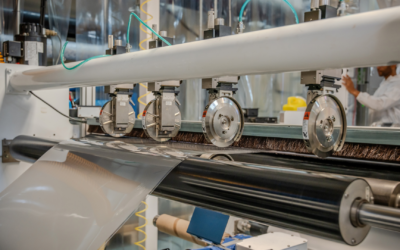
Our capabilities include optical mastering, direct laser writing, holographic replication, and roll-to-roll manufacturing, allowing microstructured and holographic optical technologies to be developed with scalability in mind.
For emerging eVTOL manufacturers and their suppliers, this creates an opportunity to work with an optical partner across multiple stages of development, from early optical concepts and prototyping through manufacturing-oriented design and production.
As advanced air mobility matures, that transition from what is optically possible to what can be reliably manufactured will become increasingly important.
One Aircraft, Multiple Optical Opportunities
The evolution of eVTOL aircraft isn’t creating a single optical opportunity. It is creating an interconnected ecosystem of them.
Cockpit displays need controlled illumination. Exterior lighting requires precise beam shaping. Landing systems benefit from better visibility. Sensors depend on carefully managed light. Future HUD and transparent display architectures may require entirely new approaches to integrating optical information into aircraft structures.
Luminit’s portfolio spans many of these requirements, including Light Shaping Diffusers®, holographic optical elements, microoptics, and scalable holographic manufacturing.
That breadth creates opportunities to collaborate with eVTOL manufacturers, avionics suppliers, lighting developers, and other advanced air mobility partners as new aircraft move from development toward commercialization.
Shaping the Optical Future of Advanced Air Mobility
The aircraft may be changing, but so are the optical systems inside and around it.
As eVTOL platforms evolve, engineers will need to balance visibility, performance, efficiency, weight, packaging, and manufacturability. Advanced optics provide another set of tools for solving those challenges.
For Luminit, advanced air mobility represents an opportunity to apply decades of light-management and holographic expertise to an emerging generation of aircraft, while working alongside partners to develop optical solutions suited to their individual platforms.
Interested in exploring how Luminit’s optical technologies could support your eVTOL or advanced air mobility program? Contact our team to discuss your application.